
Dog Eye Allergies: Symptoms and Treatment
Dog eye allergies occur when a dog’s immune system overreacts to an environmental trigger such as pollen, dust mites, or mold causing inflammation and irritation in and around the eyes. Also known as allergic conjunctivitis, this condition is one of the most common allergy-related complaints veterinarians see in dogs, and the eyes are often the first place those reactions make themselves known. If your dog has been squinting, pawing at their face, or dealing with red, watery eyes that just won’t quit, allergies may be the culprit, and you’re in the right place to find out. This guide covers everything you need to know about dog eye allergy symptoms, what triggers them, how they’re diagnosed, and the treatment options that can bring your dog real, lasting relief.
What Are Dog Eye Allergies?
Dog eye allergies, medically referred to as allergic conjunctivitis, occur when the conjunctiva, the thin tissue lining the inner eyelids and the white part of the eye, becomes inflamed in response to an allergen. This is different from other forms of conjunctivitis, such as bacterial or viral infections, though the symptoms can look very similar.
Understanding the difference matters because the treatment approach varies significantly. Allergic conjunctivitis requires identifying and managing the allergen, while infectious conjunctivitis requires medication to address the pathogen causing the infection. That’s why it’s important to have a veterinarian evaluate your dog’s eyes rather than assuming allergies are the cause.
Common Symptoms of Eye Allergies in Dogs
Recognizing the symptoms of dog eye allergies early helps prevent secondary complications like infections. Dogs can’t tell us when their eyes are bothering them, so it’s up to us to watch for the signs. Eye allergies in dogs tend to affect both eyes simultaneously and often occur alongside other allergy symptoms like skin irritation or sneezing.
Signs to Watch For
- Red or pink eyes (conjunctival redness)
- Watery or clear eye discharge
- Swollen, puffy eyelids
- Frequent squinting or blinking
- Rubbing the face or eyes on furniture, carpet, or with their paws
- Crusty buildup around the eyes after sleep
- Sensitivity to light
- Cloudy appearance over the eye (less common, but warrants immediate attention)
If the discharge is yellow, green, or thick, this may indicate a bacterial infection rather than or in addition to allergies. Thick discharge is a reason to contact your veterinarian promptly, as it may require antibiotic treatment.
What Causes Eye Allergies in Dogs?
Dog eye allergies are triggered by allergens, which are substances that the immune system incorrectly identifies as threats. When a dog is exposed to an allergen they’re sensitive to, the immune system releases histamine and other inflammatory chemicals that cause the characteristic redness, swelling, and irritation.
Environmental Allergens
Environmental allergens are the most common culprits behind dog eye allergies. These include tree, grass, and weed pollen, mold spores, dust mites, and pet dander (yes, dogs can be allergic to other animals). Seasonal allergies in dogs often flare up during spring and fall when pollen counts are high, though some dogs experience year-round symptoms depending on their specific triggers.
In Florida, the allergy season can be particularly challenging due to the warm climate, high humidity, and year-round plant growth. Dogs in Parrish, FL and surrounding areas may experience ongoing eye allergy symptoms even outside of traditional allergy seasons.
Contact Allergens
Some dogs develop eye irritation from direct contact with a substance that triggers a localized allergic response. This can include certain grooming products, cleaning products used on surfaces or bedding, grass or plants they walk through, smoke, or chemical sprays. Contact allergies typically affect one eye more than the other if the dog rubbed against something on one side.
Food Allergies
Food allergies in dogs can manifest as skin issues, gastrointestinal problems, and yes, even eye symptoms. Dogs with food allergies often have chronic or recurrent eye discharge, along with itchy skin and recurring ear infections. Common food allergens in dogs include beef, chicken, dairy, wheat, and eggs. A veterinarian can help determine whether food allergies may be playing a role through an elimination diet trial.
How Are Dog Eye Allergies Diagnosed?
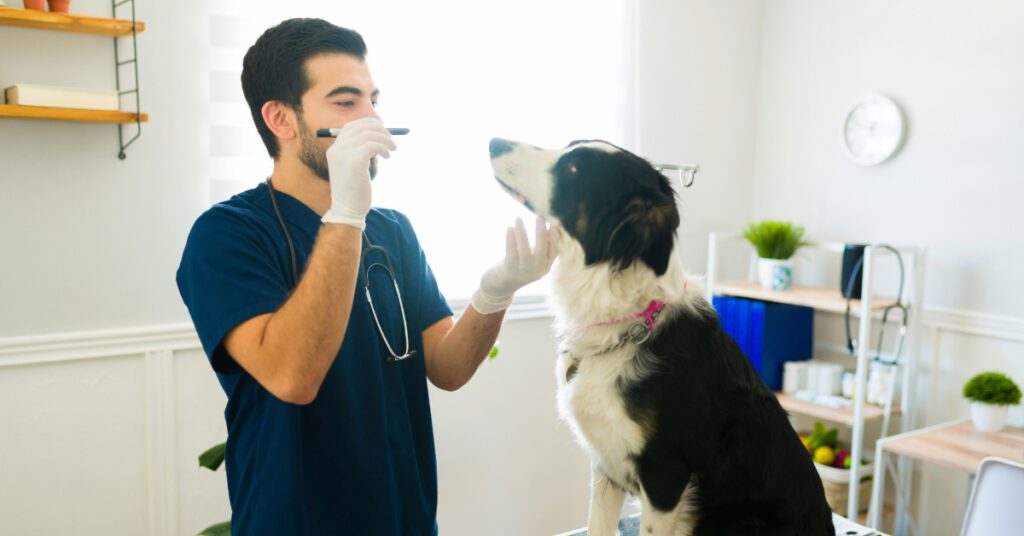
Diagnosing eye allergies in dogs involves more than a quick glance. Your veterinarian will perform a complete eye exam to assess the structures of the eye, check for discharge, measure tear production, and rule out other conditions that mimic allergic conjunctivitis. Getting an accurate diagnosis is critical because several eye conditions, including dry eye (keratoconjunctivitis sicca), corneal ulcers, glaucoma, and uveitis, can look similar to allergies but require very different treatment approaches.
Diagnostic Tests Your Vet May Use
- Schirmer tear test: Measures tear production to rule out dry eye syndrome
- Fluorescein stain: Detects corneal ulcers or scratches on the surface of the eye
- Eye pressure measurement (tonometry): Rules out glaucoma
- Cytology of eye discharge: Examines cells in the discharge to identify infection or inflammation
- Allergy testing: Intradermal skin testing or blood testing to identify specific allergens
If allergies are confirmed and your dog experiences frequent flare-ups, your veterinarian may recommend allergy testing to pinpoint the specific triggers, which can then guide a long-term management plan.
Treatment Options for Dog Eye Allergies
The treatment for dog eye allergies depends on the cause, the severity of symptoms, and whether any secondary complications like an eye infection have developed. Your veterinarian will tailor a treatment plan to your dog’s specific needs. Managing dog eye allergies effectively often requires a combination of approaches.
Medications for Eye Allergy Relief
Veterinarians frequently prescribe topical eye drops or ointments to reduce inflammation and relieve discomfort. These may include anti-inflammatory medications, antihistamine eye drops, or in some cases, low-dose topical steroids used carefully and under supervision. Oral antihistamines and anti-itch medications such as apoquel or cytopoint may also be prescribed if eye allergies are part of a broader allergic skin condition.
Allergen Immunotherapy
For dogs with confirmed environmental allergies, allergen immunotherapy, also called allergy shots or sublingual drops, can help desensitize the immune system over time. This treatment involves gradually exposing the dog to increasing amounts of specific allergens to reduce the severity of their reactions. While it doesn’t work overnight, immunotherapy is one of the most effective long-term solutions for dogs with chronic eye allergies.
Environmental Management
Reducing your dog’s exposure to known allergens is a key component of managing eye allergies. Your veterinarian may recommend keeping your dog indoors during high pollen days, using air purifiers, washing bedding frequently, and rinsing your dog’s face and paws after outdoor time. These steps won’t eliminate the problem on their own, but they can meaningfully reduce the frequency and severity of flare-ups.
When Dog Eye Problems Are More Serious Than Allergies
Not every red or watery eye in a dog is an allergy. Some eye conditions are urgent and can lead to permanent vision loss if not treated quickly. Always contact your veterinarian promptly if your dog experiences sudden eye changes, especially if they seem to be in pain.
Conditions that can look like dog eye allergies but require urgent care include corneal ulcers, glaucoma (characterized by a bulging eye and sudden pain), uveitis, entropion (eyelids that roll inward and scratch the cornea), and cherry eye (prolapse of the third eyelid gland). If your dog is squinting hard, pawing at one eye, or the eye looks cloudy or changes shape, call your vet right away.
Clear Eyes and Comfortable Dogs Start With the Right Care
Dog eye allergies are manageable with the right diagnosis and treatment plan. Whether your dog is dealing with seasonal pollen, food sensitivities, or environmental triggers, the team at Parrish Veterinary Clinic can help identify the cause of their eye symptoms and develop a treatment approach that brings real relief.
If your dog has been showing signs of eye allergies such as redness, discharge, squinting, or rubbing, don’t wait for things to get worse. Call Parrish Veterinary Clinic in Parrish, FL at (941) 216-2335 today to schedule an eye exam. We’re here to help your dog see the world clearly and comfortably.