
Dog Eye Allergies: Symptoms and Treatment
Dog eye allergies happen when your dog’s immune system overreacts to an environmental trigger like pollen, dust mites, or mold, causing redness, swelling, and irritation around the eyes. Also called allergic conjunctivitis, it’s one of the most common allergy complaints veterinarians see in dogs, and the eyes are often where the reaction shows up first. If your dog has been squinting, pawing at their face, or dealing with red, watery eyes that won’t quit, allergies could be the cause, and this guide walks through the symptoms, triggers, diagnosis, and treatment options that bring real relief.
What Are Dog Eye Allergies?
Dog eye allergies, or allergic conjunctivitis, happen when the conjunctiva (the thin tissue lining the inner eyelids and the white of the eye) becomes inflamed after exposure to an allergen. This looks similar to bacterial or viral conjunctivitis, but the cause and treatment are different.
That distinction matters. Allergic conjunctivitis is managed by identifying and limiting the allergen, while infectious conjunctivitis needs medication to treat the underlying pathogen. A veterinary exam is the only reliable way to tell the two apart.
What Are the Symptoms of Eye Allergies in Dogs?
The most common symptoms of eye allergies in dogs are redness, watery discharge, swollen eyelids, and frequent squinting or blinking. Symptoms usually show up in both eyes at once and often appear alongside other allergy signs like itchy skin or sneezing.
Signs to Watch For
- Red or pink eyes (conjunctival redness)
- Watery or clear eye discharge
- Swollen, puffy eyelids
- Frequent squinting or blinking
- Rubbing the face or eyes on furniture, carpet, or with their paws
- Crusty buildup around the eyes after sleep
- Sensitivity to light
- Cloudy appearance over the eye (less common, but warrants immediate attention)
Yellow, green, or thick discharge points toward a bacterial infection rather than (or alongside) allergies, and it’s a reason to contact your veterinarian promptly since it may need antibiotic treatment.
What Causes Eye Allergies in Dogs?
Dog eye allergies are caused by the immune system mistaking a harmless substance, like pollen or dust, for a threat. That triggers a release of histamine and other inflammatory chemicals, which leads to the redness, swelling, and irritation dog owners notice.
Environmental Allergens
Environmental allergens are the most common cause of dog eye allergies. Tree, grass, and weed pollen, mold spores, dust mites, and even other animals’ dander can all set off a reaction. Seasonal allergies tend to flare in spring and fall when pollen counts spike, though some dogs have symptoms year-round.
In Florida, warm temperatures, high humidity, and year-round plant growth keep allergy season going longer than in other parts of the country. Dogs in Parrish, FL and the surrounding area may deal with eye allergy symptoms even outside the typical spring and fall windows.
Contact Allergens
Contact allergens cause localized irritation when a dog’s eye touches a triggering substance directly, such as grooming products, cleaning sprays, certain plants, smoke, or chemical residue. Because contact allergies come from direct exposure, they often affect one eye more than the other.
Food Allergies
Food allergies can also affect a dog’s eyes, alongside skin and digestive symptoms. Chronic or recurring eye discharge paired with itchy skin or repeat ear infections often points to a food allergy. Beef, chicken, dairy, wheat, and eggs are among the most common triggers, and a veterinarian can confirm a food allergy through an elimination diet trial.
How Are Dog Eye Allergies Diagnosed?
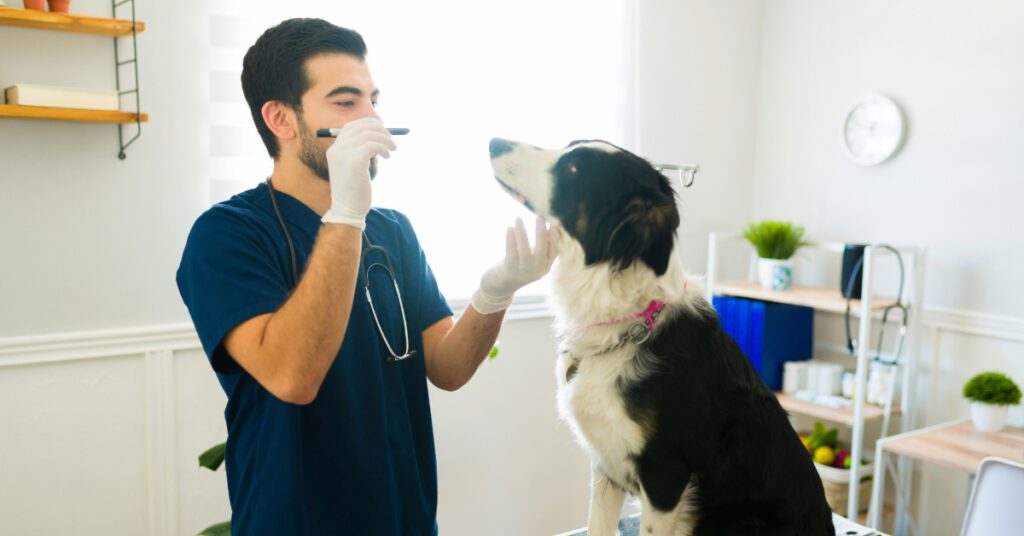
Veterinarians diagnose dog eye allergies through a complete eye exam that checks for discharge, measures tear production, and rules out other conditions that mimic allergic conjunctivitis. This step matters because conditions like dry eye, corneal ulcers, glaucoma, and uveitis can look like allergies but need very different treatment.
Diagnostic Tests Your Vet May Use
- Schirmer tear test: measures tear production to rule out dry eye syndrome
- Fluorescein stain: detects corneal ulcers or scratches on the eye’s surface
- Eye pressure measurement (tonometry): rules out glaucoma
- Cytology of eye discharge: examines cells to identify infection or inflammation
- Allergy testing: intradermal skin testing or blood testing to pinpoint specific allergens
If allergies are confirmed and flare-ups keep happening, your veterinarian may recommend allergy testing to identify exact triggers and build a long-term management plan around them.
How Are Dog Eye Allergies Treated?
Treatment for dog eye allergies depends on the underlying cause, how severe the symptoms are, and whether a secondary infection has developed. Most dogs respond well to a combination of medication and allergen management tailored to their specific triggers.
Medications for Eye Allergy Relief
Topical eye drops or ointments, including anti-inflammatories, antihistamine drops, or carefully supervised low-dose steroids, are commonly prescribed to ease inflammation and discomfort. If eye allergies are part of a broader allergic skin condition, your vet may also add oral antihistamines or anti-itch medications such as apoquel or cytopoint.
Allergen Immunotherapy
Allergen immunotherapy, also known as allergy shots or sublingual drops, gradually exposes a dog to increasing amounts of a specific allergen to desensitize their immune system over time. It’s not a quick fix, but for dogs with confirmed environmental allergies, it’s one of the most effective long-term solutions available.
Environmental Management
Limiting allergen exposure plays a major role in managing eye allergies day to day. Staying indoors on high-pollen days, running an air purifier, washing bedding often, and rinsing your dog’s face and paws after time outside can all reduce flare-ups, though they work best alongside veterinary treatment rather than in place of it.
When Are Dog Eye Problems More Serious Than Allergies?
Not every red or watery eye is an allergy, and some causes are emergencies that can lead to permanent vision loss without fast treatment. Sudden eye changes, especially with visible pain, warrant a call to your veterinarian right away.
Corneal ulcers, glaucoma (often marked by a bulging eye and sudden pain), uveitis, entropion (eyelids rolling inward and scratching the cornea), and cherry eye (a prolapsed third eyelid gland) can all mimic allergy symptoms but require urgent care. If your dog is squinting hard, pawing at one eye, or the eye looks cloudy or has changed shape, call your vet immediately.
Frequently Asked Questions About Dog Eye Allergies
How can I tell if my dog’s red eyes are caused by allergies?
Allergies are more likely when your dog has red, watery eyes along with itching, sneezing, face rubbing, or other allergy symptoms. Eye allergies also commonly affect both eyes. However, redness and watering can also be caused by infections, dry eye, corneal ulcers, glaucoma, or other eye conditions, so a veterinary examination may be needed to determine the cause.
Can seasonal allergies cause watery eyes in dogs?
Yes, seasonal allergies can cause watery eyes in dogs. Pollen from trees, grass, and weeds can trigger allergic inflammation that leads to redness, clear discharge, swelling, and frequent squinting or blinking. Dogs may experience seasonal eye allergies more often during periods when pollen levels are high.
Why does my dog keep rubbing their eyes?
A dog may rub their eyes because of allergies, irritation, infection, a foreign object, or a painful eye condition. Although allergies can cause itching and face rubbing, persistent rubbing should not automatically be assumed to be an allergy. Rubbing one eye, severe squinting, cloudiness, or sudden changes to the eye can indicate a more serious problem that needs prompt veterinary attention.
Can dog eye allergies go away on their own?
Mild eye allergy symptoms may improve when a dog is no longer exposed to the allergen, but recurring or persistent symptoms should be evaluated by a veterinarian. Eye redness, discharge, squinting, and rubbing can also occur with infections, corneal ulcers, glaucoma, and other conditions that require treatment. Identifying the underlying cause is important before assuming the problem is simply an allergy.
Where Can Dog Owners in Parrish, FL Get Help for Eye Allergies?
Parrish Veterinary Clinic helps dogs dealing with seasonal pollen, food sensitivities, or environmental triggers get an accurate diagnosis and a treatment plan that brings lasting relief. If your dog has been showing signs of eye allergies, such as redness, discharge, squinting, or rubbing, don’t wait for things to get worse. Call Parrish Veterinary Clinic in Parrish, FL at (941) 216-2335 today to schedule an eye exam. We’re here to help your dog see the world clearly and comfortably.